In computing, a printer is a peripheral which produces a text and/or graphics) of documents stored in electronic form, usually on physical print media such as paper or transparencies. Many printers are primarily used as local peripherals, and are attached by a printer cable or, in most newer printers, a USB cable to a computer which serves as a document source. Some printers, commonly known as networkprinters, have built-in network interfaces, typically wireless and/or Ethernet based, and can serve as a hard copy device for any user on the network. Individual printers are often designed to support both local and network connected users at the same time. In addition, a few modern printers can directly interface to electronic media such as memory cards, or to image capture devices such as digital cameras, scanners; some printers are combined with a scanners and/or fax machines in a single unit, and can function as photocopiers. Printers that include non-printing features are sometimes called multifunction printers (MFP), multi-function devices (MFD), or all-in-one (AIO) printers. Most MFPs include printing, scanning, and copying among their features.
Consumer and some commercial printers are designed for low-volume, short-turnaround print jobs; requiring virtually no setup time to achieve a hard copy of a given document. However, printers are generally slow devices (30 pages per minute is considered fast; and many inexpensive consumer printers are far slower than that), and the cost per page is actually relatively high. However, this is offset by the on-demand convenience and project management costs being more controllable compared to an out-sourced solution. The printing pressremains the machine of choice for high-volume, professional publishing. However, as printers have improved in quality and performance, many jobs which used to be done by professional print shops are now done by users on local printers; see desktop publishing. The world's first computer printer was a 19th century mechanically driven apparatus invented by Charles Babbage for his Difference Engine.
A virtual printer is a piece of computer software whose user interface and API resemble that of a printer driver, but which is not connected with a physical computer printer.
Modern print technology
The following printing technologies are routinely found in modern printers:
Toner-based printers
Main article: Laser printer A laser printer rapidly produces high quality text and graphics. As with digital photocopiers and multifunction printers (MFPs), laser printers employ a xerographic printing process but differ from analog photocopiers in that the image is produced by the direct scanning of a laserbeam across the printer's photoreceptor.
Another toner-based printer is the LED printer which uses an array of LEDs instead of a laser to cause toner adhesion to the print drum.
Liquid inkjet printers
Inkjet printers operate by propelling variably-sized droplets of liquid or molten material (ink) onto almost any sized page. They are the most common type of computer printer used by consumers.
Solid ink printers
Solid ink printers, also known as phase-change printers, are a type of thermal transfer printer. They use solid sticks of CMYK-coloured ink, similar in consistency to candle wax, which are melted and fed into a piezo crystal operated print-head. The printhead sprays the ink on a rotating, oil coated drum. The paper then passes over the print drum, at which time the image is transferred, or transfixed, to the page. Solid ink printers are most commonly used as colour office printers, and are excellent at printing on transparencies and other non-porous media. Solid ink printers can produce excellent results. Acquisition and operating costs are similar to laser printers. Drawbacks of the technology include high energy consumption and long warm-up times from a cold state. Also, some users complain that the resulting prints are difficult to write on, as the wax tends to repel inks from pens, and are difficult to feed through automatic document feeders, but these traits have been significantly reduced in later models. In addition, this type of printer is only available from one manufacturer, Xerox, manufactured as part of their Xerox Phaser office printer line, it is also available by various Xerox concessionaires Previously, solid ink printers were manufactured by Tektronix, but Tek sold the printing business to Xerox in 2001.
Dye-sublimation printers
A dye-sublimation printer (or dye-sub printer) is a printer which employs a printing process that uses heat to transfer dye to a medium such as a plastic card, paper or canvas. The process is usually to lay one colour at a time using a ribbon that has colour panels. Dye-sub printers are intended primarily for high-quality colour applications, including colour photography; and are less well-suited for text. While once the province of high-end print shops, dye-sublimation printers are now increasingly used as dedicated consumer photo printers.
Inkless printers
Thermal printers
Thermal printers work by selectively heating regions of special heat-sensitive paper. Monochrome thermal printers are used in cash registers, ATMs, gasoline dispensers and some older inexpensive fax machines. Colours can be achieved with special papers and different temperatures and heating rates for different colours; these coloured sheets are not required in black-and-white output. One example is the ZINK technology.
UV printers
Xerox is working on an inkless printer which will use a special reusable paper coated with a few micrometres of UV light sensitive chemicals. The printer will use a special UV light bar which will be able to write and erase the paper. As of early 2007 this technology is still in development and the text on the printed pages can only last between 16–24 hours before fading.
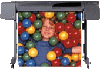
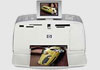
HP Printers and Multifunction
 | |
|
| Expand your network with an HP print server product. | | 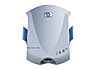 | | |
|
|
| »Back to top |
|


No comments:
Post a Comment